The Digital Exhibit offers interdisciplinary educational programs that blend creativity, inquiry, and computational thinking. From early childhood literacy experiences to coding workshops and visual history investigations, each program is designed to make learning engaging, accessible, and memorable for schools, libraries, afterschool programs, and community organizations.
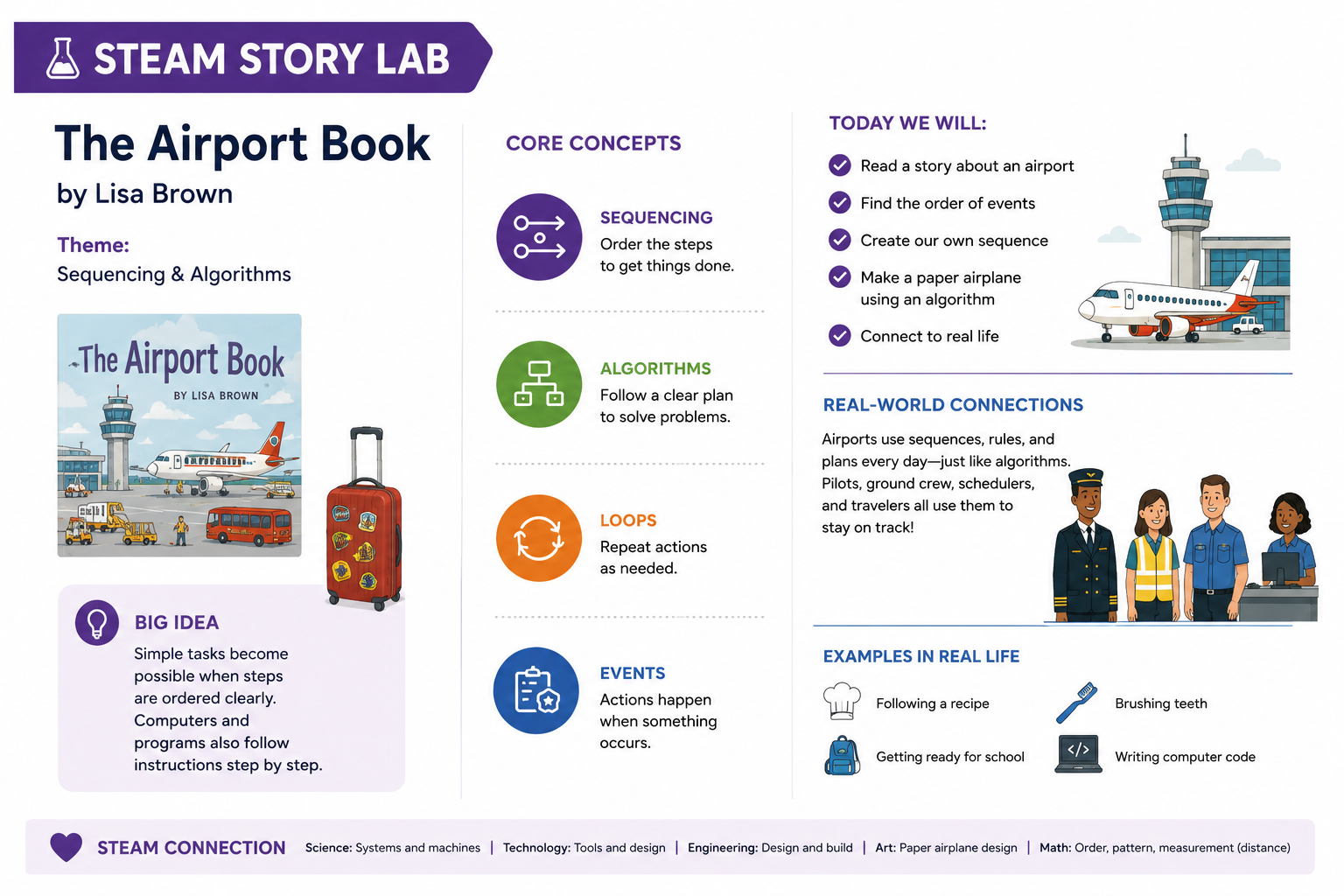
STEAM Story Lab
STEAM Story Lab is an interdisciplinary literacy and computational thinking program that introduces young learners to science, technology, engineering, art, and math through storytelling, creativity, and hands-on exploration. Guided by the DE’s LOOK–MAKE–CONNECT framework, learners are encouraged to closely observe ideas and patterns (LOOK), create and experiment through interactive activities (MAKE), and connect stories, technology, and real-world concepts to their own experiences (CONNECT). Through books, guided inquiry, creative problem-solving, and developmentally appropriate coding concepts, STEAM Story Lab helps build early digital literacy and computational thinking skills in engaging and accessible ways.
Painted Pasts
Painted Pasts is a visual literacy program that uses art, photography, historical images, and media analysis to help learners develop critical thinking and computational thinking skills. Through close observation, pattern recognition, interpretation, and inquiry-based discussion, participants learn how images communicate information, shape narratives, and influence the way people understand the world. By combining history, visual analysis, and technology-focused thinking practices, Painted Pasts supports The Digital Exhibit’s mission of expanding access to computer science education through interdisciplinary learning.
Code/Create Lab
Code/Create Lab is a creative technology program that introduces learners to coding, computational thinking, digital design, and interactive media through hands-on projects and experimentation. Blending computer science with creativity and inquiry-based learning, the program encourages students to build, problem-solve, and explore technology as both a technical and expressive tool.